Idea library
25 classroom-tested ideas. Filter by how much time you have, how much preparation you can do, the thinking level you want and how students will work.
Showing all 25 ideas
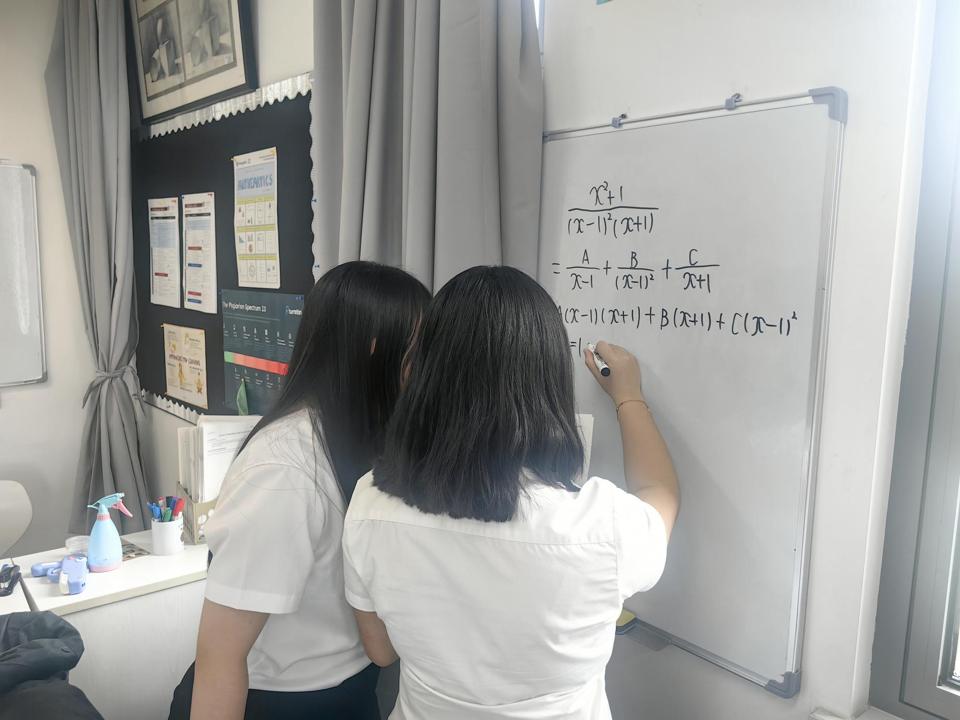
Vertical whiteboards
Groups of three solve problems standing at wall whiteboards, sharing one marker.
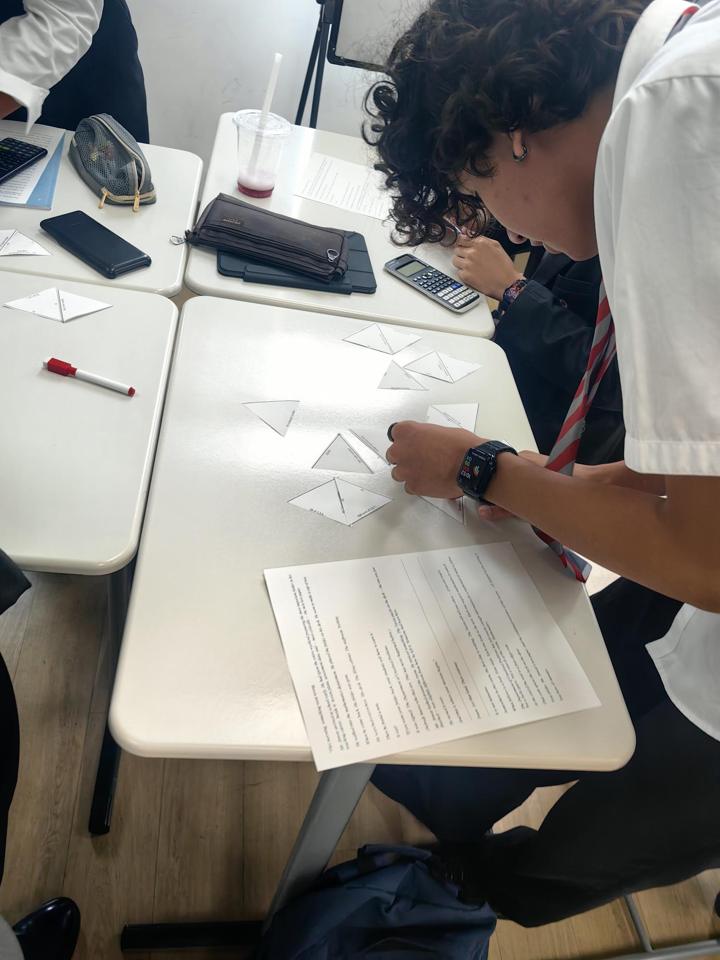
Card sorts and Tarsia puzzles
Students match, sort or assemble cards, so every single match needs a reason.
Bronze, Silver, Gold
One worksheet with three tiers. Students choose where to start and climb as they succeed.
Inquiry prompts
Put a surprising statement on the board. Students decide whether, when and why it is true.
Show-me boards
Every student writes an answer on a mini whiteboard and holds it up at the same moment.
Error detectives
Students hunt for the mistake in a worked solution, then explain and fix it.
Gallery walk
Groups post solutions around the room, then rotate to read, question and leave feedback.
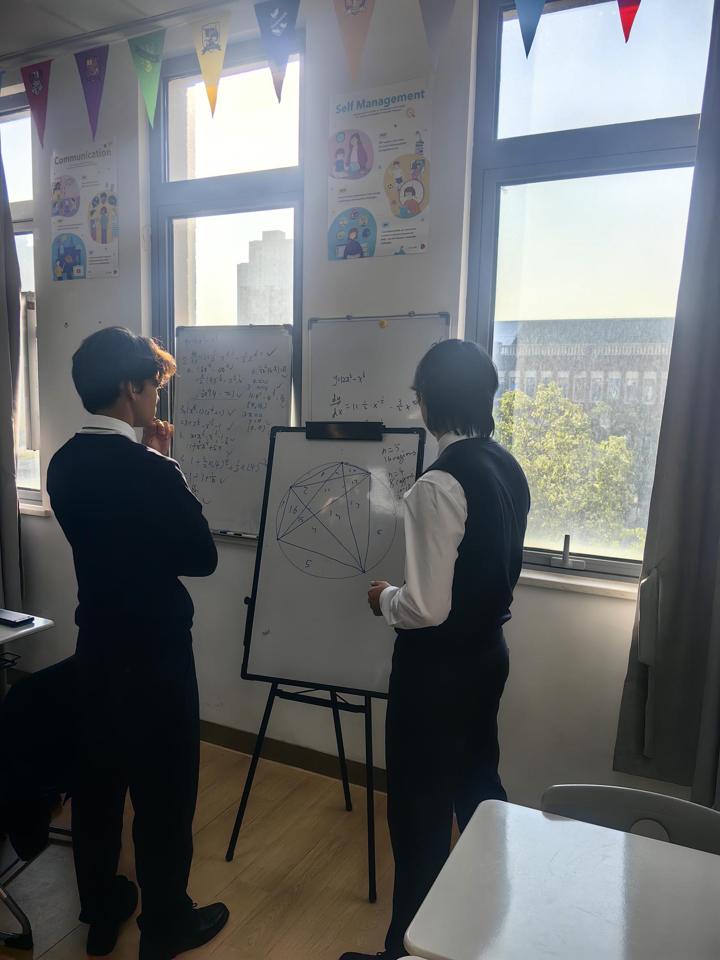
One pen, two brains
Pairs share one pen: one writes, the other explains, and they swap at every step.
Always, sometimes, never
Students decide whether a statement is always, sometimes or never true, and prove it with examples.
Odd one out
Show four items. Students argue which is the odd one out, and there is more than one good answer.
Think, pair, share
Silent thinking, then talking with a partner, then sharing with the class.
Jigsaw expert groups
Students become experts on one part of a topic, then teach it to a mixed group.
Quiz, quiz, trade
Students walk around with a question card, quiz a partner, swap cards and find someone new.
Maths relay
Teams solve a chain of questions where each answer is needed for the next one.
Four corners
Each corner of the room is an answer. Students move to the one they choose and defend it.
Code-breaker challenge
Teams solve a set of problems whose answers unlock a code, like a classroom escape room.
Exit tickets
One or two questions at the end of the lesson that tell you exactly where to start next time.
Two stars and a wish
Students mark a partner’s work against the mark scheme and give two strengths and one target.
Write your own question
Students create a question with a given answer or feature, then swap with a partner to solve.
Estimate first
Before any calculation, students make and justify a quick estimate.
Real-data modelling
Groups choose a function to model a real data set, test it and judge how well it fits.
Silent teacher
You solve an example on the board in complete silence while students watch closely, then they try a similar one.
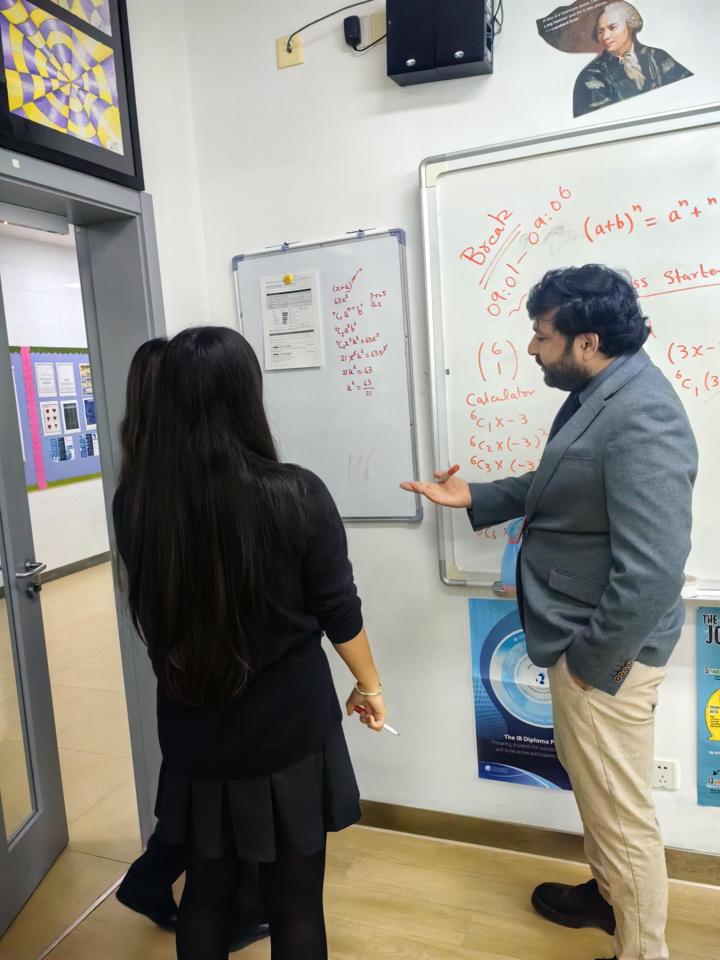
Retrieval starters
Every lesson opens with short questions on earlier topics, already on the board as students arrive.
Graph matching
Students match equations to graphs, or adjust sliders in graphing software until a graph matches a target.
Card-flip check-in
One playing card per student, kept in their notebook, gives you instant feedback from every student, even in a class of 30+.
No ideas match those filters. Try removing one.